How Google Search Works Explained (2026)
Table of Contents
- What Is Google Search?
- Why Understanding Google Search Matters
- How Google Search Works
- Crawling
- Indexing
- Ranking
- Google Ranking Factors
- How to Help Google Find Your Website
- Common Google Search Myths
- Frequently Asked Questions
- Conclusion
What Is Google Search?
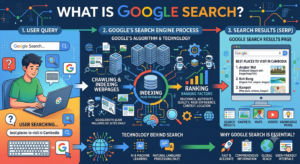
Google Search is the world’s most popular search engine, helping billions of users find information every day. Whether someone searches for a product, service, tutorial, or answer to a question, Google analyzes millions of web pages and displays the most relevant results within seconds.
Understanding How Google Search Works helps website owners create better SEO strategies and improve their visibility in Google Search results.
Unlike a simple website directory, Google uses advanced algorithms and artificial intelligence to understand what users are searching for. Its goal is to provide the most useful, trustworthy, and relevant information for every search query.
Understanding How Google Search Works is essential for website owners, bloggers, businesses, and digital marketers because it explains how web pages appear in search results and how SEO can improve visibility.
Every time you type a search query, Google follows a sophisticated process that includes discovering pages, storing information, and ranking content based on hundreds of factors.
Why Understanding Google Search Matters
Many beginners think publishing a website automatically means it will appear on Google’s first page. In reality, Google follows a structured process before showing any page in search results.
Knowing How Google Search Works helps you:
- Create SEO-friendly content
- Improve website visibility
- Increase organic traffic
- Fix indexing issues
- Build long-term search rankings
- Understand why some pages rank higher than others
For businesses, understanding Google Search can reduce advertising costs by generating consistent organic traffic.
Once you understand How Google Search Works, you can optimize every page for better rankings and long-term organic traffic.
How Google Search Works
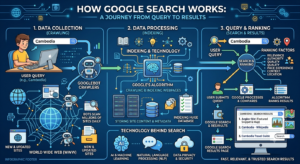
Google Search works through three major stages:
- Crawling
- Indexing
- Ranking
These stages allow Google to discover new web pages, understand their content, and decide where they should appear in search results.
Think of Google as a giant digital library.
- Crawling is like collecting books.
- Indexing is like organizing books.
- Ranking is like recommending the best books to readers.
If your website fails in any of these stages, it may not appear in Google Search results.
1. Crawling
Google uses automated software called Googlebot (also known as a crawler or spider) to discover new pages across the internet.
Googlebot finds pages by following links from existing websites, XML sitemaps, and previously indexed pages.
During crawling, Google checks:
- New blog posts
- Updated pages
- Images
- Videos
- PDFs
- Internal links
- External links
Websites with strong internal linking are usually crawled more frequently.
Crawling is the first step in How Google Search Works because Googlebot must discover your pages before they can appear in search results.
Tips to Improve Crawling
- Create an XML Sitemap.
- Submit your sitemap in Google Search Console.
- Build a clear website structure.
- Add internal links between articles.
- Avoid broken links.
- Keep important pages accessible.
2. Indexing
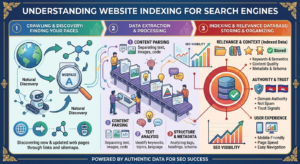
After crawling, Google analyzes the content and decides whether it should be added to its search index.
Indexing is another important part of How Google Search Works because Google stores useful pages in its search database.
The index is a massive database containing billions of web pages.
Google evaluates:
- Page content
- Titles
- Meta descriptions
- Headings
- Images
- Structured data
- Internal links
- Mobile usability
Pages that provide unique and valuable information are more likely to be indexed.
Some pages may not be indexed because of:
- Duplicate content
- Thin content
- Noindex tags
- Server errors
- Poor website quality
3. Ranking
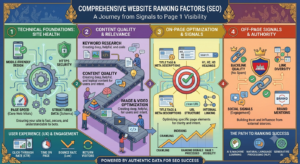
Once a page has been crawled and indexed, Google decides where it should appear in search results. This process is called ranking.
Google uses hundreds of ranking signals to determine which pages provide the best answer to a user’s search query. The goal is to deliver the most relevant, trustworthy, and helpful content.
Some of the most important ranking factors include:
- Content quality
- Search intent
- Page experience
- Website authority
- Backlinks
- Mobile friendliness
- Page speed
- HTTPS security
- Internal linking
- User experience
The better your page satisfies user intent, the higher it can rank in Google Search.
Ranking is the final stage of How Google Search Works and determines where your website appears in search results.
What Are Google’s Ranking Signals?
Although Google has never revealed every ranking factor, SEO experts have identified many important signals through years of testing.
These include:
Content Quality
Google prefers original, well-written, and informative content that genuinely helps users solve problems or answer questions.
High-quality content should:
- Be accurate
- Be easy to understand
- Cover the topic completely
- Include helpful images
- Stay updated regularly
Search Intent
Google tries to understand what users actually want.
For example:
- Informational searches
- Navigational searches
- Commercial searches
- Transactional searches
If your content matches the user’s intent, it has a much better chance of ranking.
Website Authority
Websites that consistently publish reliable, trustworthy content usually rank better.
Authority grows over time through:
- Quality backlinks
- Helpful content
- Positive user experience
- Brand recognition
User Experience
Google wants visitors to enjoy using your website.
Important user experience factors include:
- Fast loading speed
- Mobile-friendly design
- Easy navigation
- Readable content
- Secure HTTPS connection
4. Google Ranking Factors
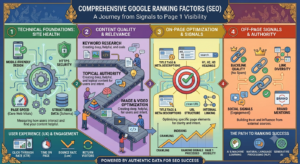
Google considers many different factors before deciding where a page should appear in search results.
Understanding these ranking factors will help you better understand How Google Search Works in 2026.
Some of the most important ranking factors in 2026 include:
High-Quality Content
Content remains the number one ranking factor.
Helpful content should answer users’ questions clearly and completely.
Avoid:
- Thin content
- Duplicate content
- Keyword stuffing
Page Speed
Fast websites provide a better user experience.
You can improve page speed by:
- Compressing images
- Using browser caching
- Choosing fast hosting
- Minimizing unnecessary scripts
Mobile Friendliness
Most Google searches now happen on mobile devices.
Your website should:
- Display correctly on smartphones
- Use responsive design
- Have readable text
- Provide easy navigation
HTTPS Security
Google prefers secure websites.
Using HTTPS helps:
- Protect user information
- Improve trust
- Support better rankings
Internal Links
Internal links help Google understand your website structure.
Good internal linking also:
- Improves crawling
- Passes page authority
- Keeps visitors on your website longer
Example:
- Learn more in our What Is SEO? guide.
- Read our Keyword Research Guide.
- Explore our Technical SEO Checklist.
Backlinks
Backlinks are links from other websites pointing to your pages.
Quality backlinks signal that your content is valuable and trustworthy.
Focus on:
- Relevant websites
- Natural links
- High-authority sources
Avoid buying backlinks or using spammy link-building techniques.
5. How to Help Google Find Your Website
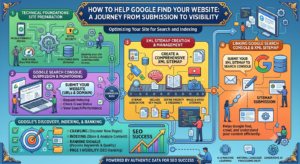
If your website is new, Google may take some time to discover it.
Here are several ways to speed up the process:
- Submit an XML Sitemap.
- Use Google Search Console.
- Create quality internal links.
- Publish fresh content regularly.
- Optimize your robots.txt file.
- Earn backlinks from trusted websites.
- Share new content on social media.
- Keep your website fast and secure.
Following these best practices makes it easier for Google to crawl, index, and rank your pages.
Following these SEO best practices makes How Google Search Works much more effective for discovering and ranking your content.
6. Common Google Search Myths
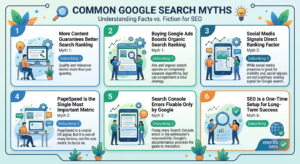
Many beginners believe myths about Google Search and SEO. These misconceptions can lead to poor optimization strategies and wasted time. Let’s look at some of the most common myths and the facts behind them.
Myth 1: Google Instantly Indexes Every New Website
This is false.
Publishing a new website does not guarantee that it will appear in Google Search immediately.
Google first needs to:
- Discover your pages
- Crawl your content
- Index the pages
- Decide whether they deserve to rank
Submitting your sitemap through Google Search Console can help Google discover your website faster.
Myth 2: More Keywords Always Mean Better Rankings
Many beginners think repeating the same keyword many times will improve rankings.
In reality, excessive keyword usage (known as keyword stuffing) can harm your SEO.
Instead, focus on:
- Writing naturally
- Covering the topic completely
- Using related keywords
- Providing helpful information
Google rewards useful content rather than pages filled with repeated keywords.
Myth 3: Backlinks Are the Only Ranking Factor
Backlinks are important, but they are only one of many ranking signals.
Google also evaluates:
- Content quality
- Search intent
- Page speed
- Mobile friendliness
- User experience
- Website security
A page with excellent content can often outperform a page that simply has more backlinks.
Myth 4: Paid Ads Improve Organic Rankings
Buying Google Ads does not increase your organic search rankings.
Google Ads and Google Search use separate systems.
Running advertisements may increase website traffic, but it does not directly affect organic SEO performance.
Myth 5: SEO Is a One-Time Task
SEO requires continuous improvement.
To maintain and improve rankings, you should:
- Update outdated content
- Publish new articles regularly
- Improve page speed
- Monitor website performance
- Build quality backlinks
Successful SEO is an ongoing process rather than a one-time project.
7. Frequently Asked Questions (FAQ)
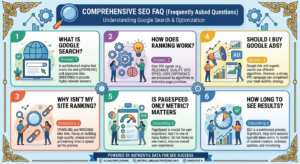
Below are answers to some of the most common questions about Google Search.
How long does Google take to index a new page?
Google may index a new page within a few hours, several days, or even several weeks. The speed depends on your website’s authority, internal links, sitemap, and crawl frequency.
Does Google rank new websites immediately?
No.
New websites usually need time to build trust and authority before they can rank well for competitive keywords.
Publishing high-quality content consistently can improve your chances of ranking faster.
What is Googlebot?
Googlebot is Google’s automated crawler.
Its job is to discover new web pages, follow links, and collect information so that pages can be added to Google’s search index.
Can I ask Google to crawl my website?
Yes.
You can submit your sitemap in Google Search Console and use the URL Inspection Tool to request indexing for new or updated pages.
How long does Google take to index a new website?
This depends on How Google Search Works and how quickly Googlebot discovers your website.
What is the difference between Crawling, Indexing, and Ranking?
- Crawling means Google discovers your pages.
- Indexing means Google stores your pages in its database.
- Ranking means Google decides where your pages appear in search results.
These three stages work together to make your content visible on Google Search.
Why isn’t my website showing up on Google?
Common reasons include:
- Your website has not been indexed yet.
- The page is blocked by robots.txt or a noindex tag.
- The content is low quality or duplicated.
- There are few internal or external links pointing to the page.
Checking Google Search Console can help identify these issues.
8. Conclusion
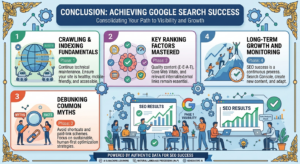
Understanding How Google Search Works is one of the most important steps toward building a successful website. Google uses a structured process—crawling, indexing, and ranking—to discover and display web pages in search results.
If you want your website to rank higher on Google, focus on creating high-quality content, improving your site’s technical performance, and providing a great user experience. SEO is a long-term strategy, and consistent improvements can lead to sustainable organic traffic over time.
Remember that Google aims to provide users with the most relevant and helpful information. By following SEO best practices and publishing valuable content, you increase your chances of earning better rankings and reaching more visitors.
Key Takeaways
- Google Search works through Crawling, Indexing, and Ranking.
- High-quality content remains one of the strongest ranking factors.
- Fast, mobile-friendly, and secure websites perform better.
- Internal links help Google understand your website structure.
- Google Search Console is essential for monitoring indexing and website performance.
- SEO requires continuous optimization rather than one-time changes.
Next Steps
If you’re new to SEO, these guides will help you continue learning:
- What Is SEO? A Complete Beginner’s Guide (2026)
- Keyword Research for Beginners
- On-Page SEO Checklist
- Technical SEO Basics
- Free SEO Tools Every Beginner Should Use
(Add internal links to these articles once they are published.)
Final Thoughts
Learning How Google Search Works gives you a solid foundation for improving your website’s visibility. Whether you run a personal blog, an online business, or a company website, understanding how Google discovers, indexes, and ranks pages will help you make better SEO decisions.
Keep learning, keep optimizing, and focus on creating content that genuinely helps your audience. Over time, these efforts can lead to stronger search rankings and consistent organic growth.
Learning How Google Search Works is one of the most important SEO skills for every website owner in 2026.
Useful Resources
Google Search Central
Google Search Console
Google SEO Starter Guide